📍 Serving Worthing & West Sussex — 24/7 Mobile Auto Locksmith

Home › Services › VW Transporter Key Replacement Worthing

VW Transporter Key Replacement Worthing With Keys Coded at the Van

A VW Transporter key replacement is a new key cut to the blade the van carries and coded to its immobiliser, and Worthing Auto Locksmith does it at the van, usually in one visit. The T5, the T6 and the T6.1 are each coded a different way, so the generation is settled from the registration on the call before anyone sets out.

✔ T4, T5, T6 and T6.1✔ Spare Keys and All Keys Lost✔ Coded at the Van✔ Open 24 Hours
🕐
Same Day Van Keys
Most jobs in one visit
🚐
Done at the Van
No recovery to a dealer
🔑
Every Generation Covered
T4 through the current T6.1
💷
Price Agreed First
Before a van is sent
What the Service Is

VW Transporter Key Replacement in Worthing

A VW Transporter key replacement is a new key cut to the blade the van carries and coded to its immobiliser, carried out at the vehicle rather than at a dealer. Two things decide the job. Which Transporter generation it is, and whether a working key remains.

The Transporter reaches a Worthing callout in more forms than any other van. A T5 running as a works van, a T6 on a courier contract and a T6.1 bought new with a single key are three separate key jobs, and the difference sits in the immobiliser generation rather than in the badge. This page covers the Transporter specifically; van key replacement covers the Transit, the Sprinter, the Vivaro and the rest.

Two jobs account for almost every Transporter callout. A spare cut while one key still works takes 30 to 60 minutes. A key built with none left takes 60 to 150 minutes, because the immobiliser data is read first and the missing keys are erased afterwards.
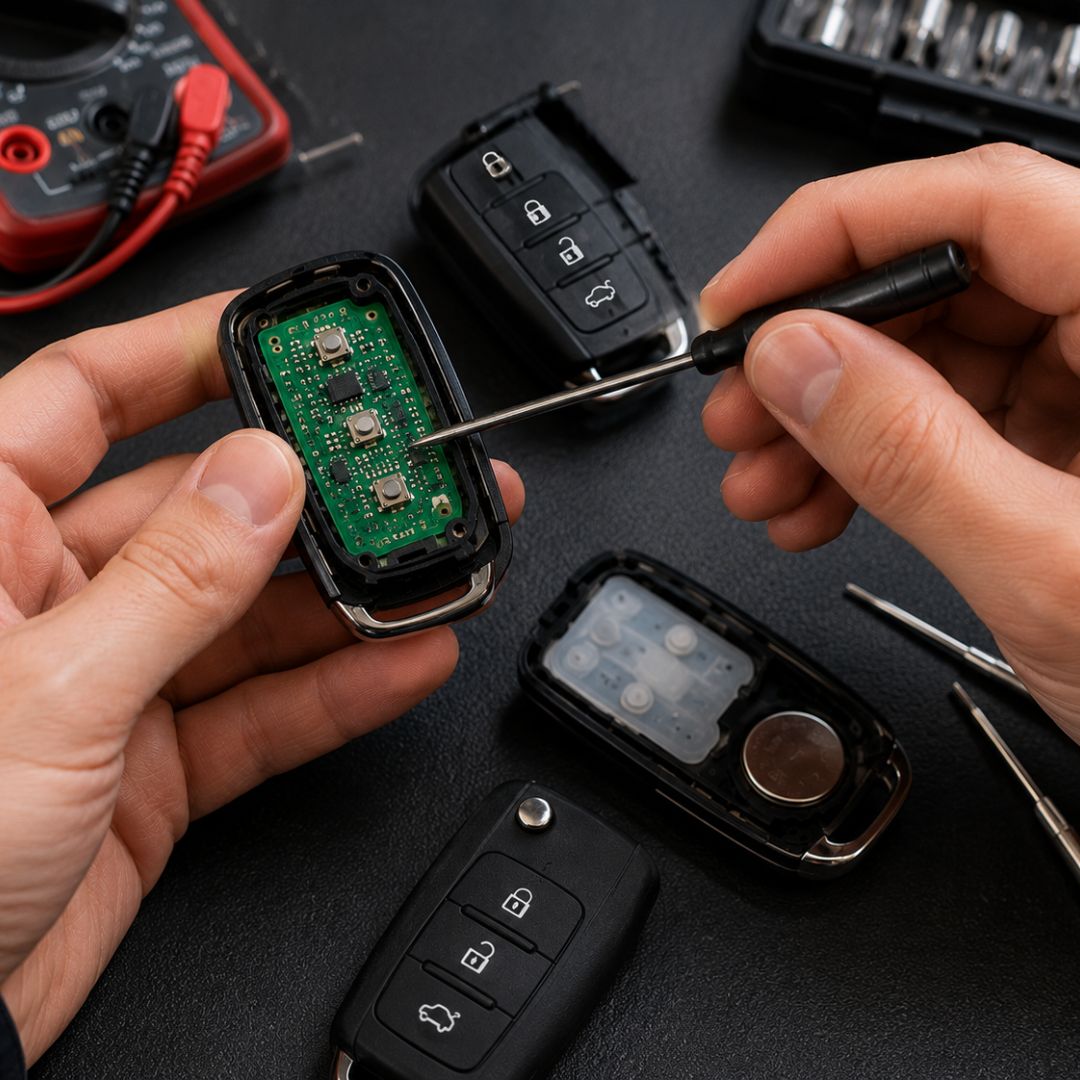
Replacement Volkswagen key cut and coded at the vehicle in Worthing
● Cut and coded at your van
Generation by Year

Transporter Key Systems by Generation and Year

Transporter keys split across four van generations and three immobiliser families. The table below sets every Transporter generation against its years, its key system and what that means for a replacement.

ModelYearsKey systemWhat it means for a key
Transporter T41990 to 2003Early VW immobiliserBlade profile confirmed at the van on the earliest builds
Transporter T52003 to 2009Megamos ID48 transponderSpare keys and all keys lost at the van
Transporter T5.12009 to 2015Megamos ID48 transponderSpare keys and all keys lost at the van
Transporter T62015 to 2019Megamos ID48, later immobiliserCoded through the port in the cab on most builds
Transporter T6.12019 onwardNewer Volkswagen platform systemCovered, with equipment built for that platform
CaddyBy model yearFollows the car of the same yearsPriced and timed as the matching van
CrafterBy model yearVaries by build and yearGeneration confirmed from the registration first

The 2019 model year is the line that changes the job on a Transporter. A van registered before it is a T5 or a T6 and is coded through the port in the cab. A van registered after it is a T6.1 and needs equipment built for the newer platform. The registration settles which of those a van is, which is why it is asked for first.

The blade profile runs unchanged across the whole Transporter range, so the blade never identifies the key system on its own, and a van whose key was swapped by a previous owner is confirmed at the vehicle rather than from the paperwork. Car key cutting is carried out on the machine in the van, to the lock rather than to the old key.

The Boundary

What Changed on the Transporter in 2019

The T6.1 moved the Transporter onto the newer Volkswagen electronics platform, and the immobiliser moved with it. That is the whole of what changed in 2019, and it is the reason two vans that look almost identical on a driveway are two different jobs.

On a T5 or a T6 the new key is coded through the port in the cab, and a spare takes under an hour. On a T6.1 the coding needs equipment built for the newer platform, and the generation is confirmed against the registration before a visit is booked rather than after a van arrives.

A T6.1 is covered, including a van down to its last key. The newer platform changes the equipment and the time, not the answer. The same platform change runs across the Volkswagen car range in the same years, and Volkswagen key replacement sets out what it means for the cars.

What It Costs

VW Transporter Key Replacement Cost

A VW Transporter key replacement costs between £150 and £320. A spare cut while one key still works sits at the bottom of that band, and all keys lost sits at the top.

The table below sets the five Transporter jobs against the time each one takes at the van and the factor that moves its price.

Transporter jobTime at the vanWhat moves the price
Spare key, one key works30 to 60 minutesWhich generation the van is
Remote or fob fault20 to 40 minutesWhether the board and battery are intact
Broken blade removed15 to 30 minutesWhich lock holds the fragment
T6.1 spare key45 to 90 minutesEquipment built for the newer platform
All keys lost60 to 150 minutesImmobiliser data read and keys erased

Every Transporter job is quoted in writing before work starts, and the quote covers the key, the coding and the callout as one figure. Three factors move that figure. The generation comes first, then whether a working key remains, then the hour of the callout.

Spare or All Keys Lost

Spare Transporter Key Against All Keys Lost

A spare Transporter key is the cheaper job by a wide margin, and on a van carrying one key it is the job worth booking early. The original stays in use throughout, both keys are tested on the van before the job closes, and the work takes 30 to 60 minutes. Spare car keys are cut at the address the van is parked at, including a driveway, a yard or a site.

An all keys lost Transporter is a different job. With nothing left to copy, the immobiliser data is read from the van itself, so proof of ownership is checked first. The V5C is preferred and a clear photograph of it is accepted, alongside photo identification matching the registered keeper. Lost car keys covers the same job across other makes.

The missing keys still start the van until they are erased, and on a Transporter that matters more than on most vans, because it is one of the most targeted vehicles on a UK street. An immobiliser reset is carried out in the same visit for that reason.

How Long It Takes

How Long a Transporter Key Takes at the Van

A spare Transporter key takes 30 to 60 minutes at the van and an all keys lost Transporter takes 60 to 150 minutes. A snapped blade is removed in 15 to 30 minutes and a replacement cut in the same visit.

Three things add time to a Transporter job. Reading the immobiliser data on an all keys lost van is the longest single step. Erasing several old keys adds a few minutes per key. A van that cannot be worked in adds whatever it takes to clear the space, whether it is boxed in on a site or parked nose-in at a seafront bay.

A blade snapped in the door or the ignition is removed before anything else, because forcing it deeper turns a short job into a barrel repair. Broken car key extraction covers that step on the door, the ignition and the side door lock.

How It Works

How a Transporter Key Replacement Works

Four steps take a Transporter from the call to a working key, and every one of them happens at the van.

1

Call With the Registration

Give the registration and the year. That settles whether the van is a T5, a T6 or a T6.1, and it is the step that decides the equipment before anyone sets out.

2

Ownership Checked

The V5C or a clear photograph of it, plus photo identification matching the registered keeper. No blade is cut before that check is complete.

3

Cut and Coded at the Van

The blade is cut on the machine in the van and the key is coded to the immobiliser on the spot. The Transporter stays where it is parked.

4

Tested and Old Keys Erased

Every key is tested on the lock and the ignition, and any key not in hand is erased before the job closes.

Replacement van and car keys cut at the vehicle across Worthing
● Every key tested before the visit ends
The Three Routes

Where a Transporter Key Can Be Made

A Transporter key can be made by three different routes, and they do not all produce the same thing. The difference between them is whether the key is coded to the van as well as cut.

The main dealer. The van is booked in and taken to them, and the timescale runs in days rather than hours. The dealer route covers every generation without question, and that is the one thing it holds over the alternatives.

A key-cutting counter. A counter cuts a blade to an existing key, which is a different job from coding one. A cut blade turns the door lock and does not start the van, because the immobiliser is a separate step that happens at the vehicle. Car key programming is the step that makes a cut blade into a working key.

A mobile specialist. Both steps happen in one visit, at the van, and the van does not move. The blade is cut on the machine in the van and the key is coded on the spot, which is why a Transporter parked on a site at eight in the morning is working again before lunch.

Downtime

A Transporter Off the Road Costs a Day

A Transporter off the road costs a working day, and on a fleet it costs a day per van. That is the whole reason a mobile key beats recovery for a working vehicle. The van does not move, the load and the tools stay inside it, and the job finishes at the kerb in the same visit.

Out of hours matters more on a van than on a car, because a key that fails at five in the morning costs the whole day rather than the evening. 24 hour emergency auto locksmith cover runs every day of the year, and the line is answered by the same team rather than by an overnight message service.

Conversions

Transporter Campers and Day Vans

This coastline carries more Transporter conversions than panel vans on a summer weekend, and they share one problem. A camper or a day van is often bought used with a single key, kept for years and driven seasonally, so the one key wears quietly and fails a long way from home.

A conversion is keyed exactly as a panel van of the same generation, because the immobiliser belongs to the base vehicle rather than to the build behind the cab. Work is carried out on a driveway, in a storage yard, on a campsite pitch or in a seafront car park, and a non-destructive vehicle entry opens a locked conversion without touching the door skin or the seals.

Fleets

Transporter Fleet and Multiple Van Keys

Fleet work is priced per vehicle and per visit, so several Transporters keyed on one attendance cost less each than the same vans booked separately. A visit of four vans runs 30 to 60 minutes per vehicle once the first is done. Light commercial vehicle locksmith work covers the wider fleet beyond the Transporter.

Every key issued is recorded against its registration and handed to the operator in writing. That record turns the next lost key into a replacement rather than an investigation, because the key count for the van is already known.

What a New Key Does Not Fix

Old Keys Still Start a Used Transporter

Every key a Transporter has ever been taught still starts it until that key is erased, and a used van often comes with fewer keys in the hand than it recognises in the immobiliser. A new key adds to that count. It removes nothing.

That matters more on this van than on most. The Transporter remains one of the most targeted vehicles on a UK street, and a key held by somebody else is a working key rather than a souvenir. The risk sits in the key count rather than in the locks.

The key count is read from the van, and any key not physically in hand is erased in the same visit. On a used Transporter that check is worth running alongside a spare, which is one attendance rather than two. A worn fob that still holds its coding is repaired rather than replaced, and remote car key repair covers that on the flip keys these vans carry.

Coverage

Areas We Cover for Transporter Keys

Transporter keys are cut and coded across Worthing and the towns around it, on a driveway, at a yard, on a site or in a seafront bay. Each area below carries its own coverage detail and response time.

Every town on the areas we cover list is reached the same day, and a site visit is booked for a set hour rather than a window.

FAQs

Questions About Transporter Key Replacement

A VW Transporter key replacement costs between £150 and £320. A spare cut while one key still works sits at the bottom of that band, and a key built with none left sits at the top, because the immobiliser data is read and the old keys are erased.

Every Transporter generation is covered, from the T4 through to the current T6.1. The generation is settled from the registration on the call, because a T6.1 needs equipment built for the newer Volkswagen platform and an earlier van does not.

A Transporter key is cut and coded at the van in one visit, including on a van with no key left. Cutting a blade and coding it are two separate steps, and transponder key programming is the one that makes the engine start.

A Transporter camper is keyed exactly as a panel van of the same generation, because the immobiliser belongs to the base vehicle rather than to the build behind the cab. Work is carried out on a driveway, a pitch or a seafront bay, and a replacement key fob is supplied and coded in the same visit.

Fleet work is priced per vehicle and per visit, so several Transporters keyed on one attendance cost less each than the same vans booked separately. A written record of every key issued against its registration is left with the operator.

Old keys still start a used Transporter until they are erased, and a used van often recognises more keys than it came with. The key count is read from the van and erased in the same visit, and a barrel that turns loosely is a separate fault covered by ignition barrel repairs.

Transporter Keys Coded at Your Van Across Worthing

Give the registration and the year on the call, and the generation is settled before anyone sets out. Work is carried out at the van, seven days a week.

Scroll to Top