 25 September 2026
 8 min read
 Worthing Auto Locksmith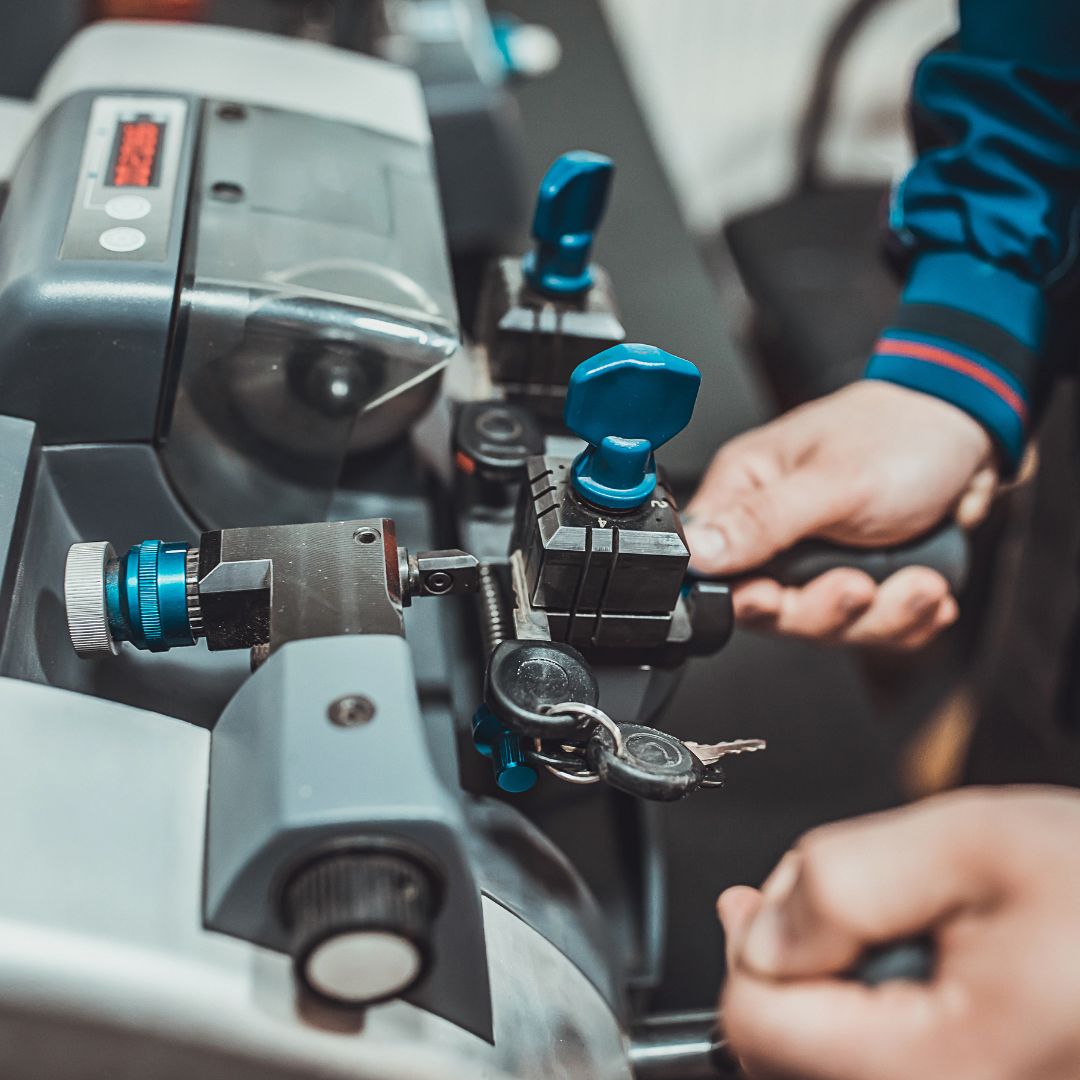
Yes. An auto locksmith makes a car key with no original to copy, by producing the blade from the vehicle itself and then writing the new key into the immobiliser, at the roadside.
It is an ordinary job rather than an unusual one, and the car stays where it is throughout. What follows is how the metal half is solved with nothing to copy, what the VIN actually contributes, and the cases where it cannot be done.
Can a locksmith make a car key without the original?
On the large majority of vehicles on a UK road, including a car with no key at all, a new working key is produced at the vehicle. This is the job auto locksmiths do most often, and it is the reason the trade exists separately from a main dealer.
Two halves are solved separately, and they are different problems. A blade the locks accept, and an electronic identity the car accepts. Neither half is any use on its own. A perfectly cut blade opens the doors and will not start the engine, and a programmed chip with the wrong blade will not turn in the ignition.
Both happen where the vehicle is parked. That is the practical point of the whole service, because a car with no working key usually cannot be driven anywhere, and lost car keys would otherwise mean a recovery truck before anything else could happen.
One thing gates the job, and it is not the technical side. It is the ownership check. More on that further down, because it is also the answer to the question most people are too polite to ask.
What does the locksmith need from you?
Four things, and the split between them matters more than the list itself. Two identify the car. Two identify you.
- The registration and the year
- The make, the model, and whether it is keyless
- The V5C, or one of the accepted alternatives
- Photo identification in the same name
The first two decide whether the job is possible and what it costs. The second two decide whether it goes ahead at all. Most guides run all four together as one shopping list, which hides the most important thing about them. Proof of ownership covers exactly what is accepted and what to do when the logbook has gone missing.
How is the blade cut when there is no key to copy?
Two routes produce a blade when there is nothing to copy, and which one is used depends on the car rather than on preference.
Cut to code. Manufacturers hold a key code against each vehicle. Given the vehicle details and the right to ask for that code, the blade is produced from the number without the car being touched at all. This covers most ordinary vehicles and it is the faster of the two, which is why car key cutting on a modern car usually begins with a phone call rather than with a lock.
Reading the lock. Where no code is available, the answer is already in the car, because a lock is a physical record of the key that fits it. The lock is read and the blade produced from what it gives up. This is the route for older vehicles, obsolete models and imports, and it takes longer than working from a code.
There is a distinction worth making here, because the two words get used as one. A duplicate is copied from an existing key. What happens with no key at all is origination, a key produced from the vehicle rather than from another key. Every locksmith duplicates. Originating is the harder job and the one this question is really about.
Can a key be cut from the VIN number?
Yes, and here is the part that matters. A key is cut from the VIN, and the VIN is not permission to have one.
What the VIN does is identify the vehicle precisely enough for the key code to be requested. That is a technical input and it is genuinely useful.
What the VIN does not do is say anything at all about who the car belongs to. It is visible through the bottom of the windscreen on most cars, which settles the question on its own. Anything readable from the pavement cannot be proof of anything.
The permission comes from somewhere else entirely, which is the ownership check made before the code is ever requested. That order is deliberate. Guides that describe the VIN as all that is required are right about the technical input and misleading about the job.
How long does it take at the roadside?
The table below sets the four usual situations against the time each takes at the vehicle and the thing that decides it.
| Situation | Time at the vehicle | What decides it |
|---|---|---|
| Ordinary car, code available | 45 to 90 minutes | How quickly the code is released |
| Older car, lock read instead | 90 to 150 minutes | Which lock is used and its condition |
| Keyless or push-button car | 60 to 120 minutes | The make and the model year |
| Vehicle needing a manufacturer route | Booked separately | The route rather than the work |
The car stays where it is throughout, so the clock starts when the van arrives rather than when a recovery truck is booked. On price, an all keys lost job on an ordinary car runs between £180 and £350, and car key replacement is quoted from the registration before anyone sets off.
Does this work on keyless and push-button cars?
Yes, on most of them. The difference is that there is no blade to cut for the ignition, so almost the whole job moves to the electronics, while an emergency blade still has to be produced for the door lock. Smart key replacement covers that side of it.
The honest qualifier is the model year. The newest and most restricted vehicles are where the manufacturer route sometimes wins, and the year settles which of the two applies before anyone sets off.
What stops somebody doing this to your car?
This is the question underneath the question, and it deserves a straight answer rather than a reassurance.
The ownership check is the control. No documents, no key. That is a fixed position rather than a preference, and it is the reason the paperwork gets asked for before the equipment comes out of the van rather than after.
The record is the second control. Every key issued is logged against the registration, the documents seen and the date, which makes the job traceable afterwards. The same visit can also erase keys that no longer belong to the vehicle, and an immobiliser reset is what closes the risk on a car whose old keys are unaccounted for.
The third is the trade itself. Auto locksmithing in the UK runs on reputation and trade association membership rather than on a licence, which puts the weight on the individual business. A locksmith who treats the document check as optional is the one to walk away from.
The same check that protects a stranger from having a key cut to their car is the check that feels like an inconvenience on a cold morning when the car is yours. It is the same check either way, and that is the point.
When can a key not be made without the original?
Four situations, and only one of them is technical.
- The manufacturer has closed the route. On some makes key work sits behind a dealer account, and the job goes there instead
- The vehicle is very recent. Restricted data on the newest models narrows what can be done independently
- Ownership cannot be established. Not a technical limit at all, and the reason behind most refused jobs
- The lock is damaged past reading, usually after a theft attempt, which turns one job into two
The last one is worth knowing about in advance. A forced or drilled barrel has to be dealt with before a key means anything, and ignition barrel repairs are quoted separately from the key itself.
Which of the four applies is established from the registration on the call, before anyone sets off. A limit known in advance is a quote. The same limit found at the kerb is a wasted morning.
What to do if you have lost every key
Four steps, in this order, turn a car with no keys into a job somebody can quote on.
From there it is one visit. The blade is produced, the key is written to the car and every key is tested before anyone leaves, at whatever hour the car chose to do this, because 24 hour emergency auto locksmith cover runs every day of the year.

 07932805727